
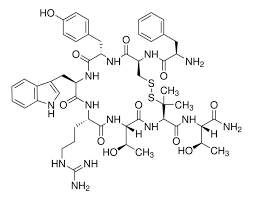
Buy RB-64 (22-thiocyanatosalvinorin A) Cas 1174223-49-4
Buy RB-64 (22-thiocyanatosalvinorin A) Cas 1174223-49-4
RB-64, also known as 22-thiocyanatosalvinorin A, is a semi-synthetic derivative of salvinorin A. It is an irreversible agonist, with a reactive thiocyanate group that forms a bond to the κ-opioid receptor (KOR), resulting in very high potency.[1] It is functionally selective, activating G proteins more potently than β-arrestin-2.[2] RB-64 has a bias factor of up to 96 and is analgesic with fewer of the side-effects associated with unbiased KOR agonists.[3] The analgesia is long-lasting. Compared with unbiased agonists, RB-64 evokes considerably less receptor internalization.
BenchChem offers high-quality this compound suitable for many research applications. Different packaging options are available to accommodate customers’ requirements. Please inquire for more information about this compound including the price, delivery time, and more detailed information Buy RB-64 (22-thiocyanatosalvinorin A) Cas 1174223-49-4
| Molecular Formula |
C24H27NO8S
|
|---|---|
| Molecular Weight |
489.54
|
| CAS # |
1174223-49-4
|
| PubChem CID |
73347341
|
| Appearance |
Typically exists as solids at room temperature
|
| Hydrogen Bond Acceptor Count | |
| Rotatable Bond Count | |
| Heavy Atom Count |
34
|
| Complexity |
929
|
| Defined Atom Stereocenter Count |
7
|
| SMILES |
S(C#N)CC(=O)O[C@H]1C[C@@H](C(=O)OC)[C@]2(C)CC[C@H]3C(=O)O[C@H](C4=COC=C4)C[C@]3(C)[C@H]2C1=O
|
| Synonyms |
RB-64
|
| HS Tariff Code |
2934.99.9001
|
| Storage |
Powder -20°C 3 years 4°C 2 years In solvent -80°C 6 months -20°C 1 month |
| Shipping Condition |
Room temperature (This product is stable at ambient temperature for a few days during ordinary shipping and time spent in Customs)
|
| Solubility (In Vitro) |
May dissolve in DMSO (in most cases), if not, try other solvents such as H2O, Ethanol, or DMF with a minute amount of products to avoid loss of samples
|
|---|---|
| Solubility (In Vivo) |
Note: Listed below are some common formulations that may be used to formulate products with low water solubility (e.g. < 1 mg/mL), you may test these formulations using a minute amount of products to avoid loss of samples.
Injection Formulations
(e.g. IP/IV/IM/SC) Injection Formulation 1: DMSO : Tween 80: Saline = 10 : 5 : 85 (i.e. 100 μL DMSO stock solution → 50 μL Tween 80 → 850 μL Saline) View MoreInjection Formulation 4: DMSO : 20% SBE-β-CD in saline = 10 : 90 [i.e. 100 μL DMSO → 900 μL (20% SBE-β-CD in saline)] Oral Formulations
Oral Formulation 1: Suspend in 0.5% CMC Na (carboxymethylcellulose sodium) View MoreOral Formulation 3: Dissolved in PEG400
Note: Please be aware that the above formulations are for reference only. InvivoChem strongly recommends customers to read literature methods/protocols carefully before determining which formulation you should use for in vivo studies, as different compounds have different solubility properties and have to be formulated differently. (Please use freshly prepared in vivo formulations for optimal results.) |
| Preparing Stock Solutions | 1 mg | 5 mg | 10 mg | |
| 1 mM | 2.0427 mL | 10.2137 mL | 20.4273 mL | |
| 5 mM | 0.4085 mL | 2.0427 mL | 4.0855 mL | |
| 10 mM | 0.2043 mL | 1.0214 mL | 2.0427 mL |
*Note: Please select an appropriate solvent for the preparation of stock solution based on your experiment needs. For most products, DMSO can be used for preparing stock solutions (e.g. 5 mM, 10 mM, or 20 mM concentration); some products with high aqueous solubility may be dissolved in water directly. Solubility information is available at the above Solubility Data section. Once the stock solution is prepared, aliquot it to routine usage volumes and store at -20°C or -80°C. Avoid repeated freeze and thaw cycles. Buy RB-64 (22-thiocyanatosalvinorin A) Cas 1174223-49-4, Buy RB-64 (22-thiocyanatosalvinorin A) Cas 1174223-49-4, Buy RB-64 (22-thiocyanatosalvinorin A) Cas 1174223-49-4, Buy RB-64 (22-thiocyanatosalvinorin A) Cas 1174223-49-4, Buy RB-64 (22-thiocyanatosalvinorin A) Cas 1174223-49-4, Buy RB-64 (22-thiocyanatosalvinorin A) Cas 1174223-49-4, Buy RB-64 (22-thiocyanatosalvinorin A) Cas 1174223-49-4, Buy RB-64 (22-thiocyanatosalvinorin A) Cas 1174223-49-4, Buy RB-64 (22-thiocyanatosalvinorin A) Cas 1174223-49-4, Buy RB-64 (22-thiocyanatosalvinorin A) Cas 1174223-49-4, Buy RB-64 (22-thiocyanatosalvinorin A) Cas 1174223-49-4
22-Thiocyanatosalvinorin A

Content Navigation
CAS Number
Product Name
IUPAC Name
Molecular Formula
Molecular Weight
InChI
InChI Key
Canonical SMILES
Isomeric SMILES
22-Thiocyanatosalvinorin A, also known as RB-64, is a synthetic derivative of salvinorin A, a potent psychoactive compound derived from the plant Salvia divinorum. This compound is characterized by the presence of a thiocyanate group at the 22-position of the salvinorin A structure. The modification enhances its pharmacological profile, particularly its selectivity and potency as an agonist for the kappa-opioid receptor, which is implicated in various physiological processes including pain modulation and mood regulation .
22-Thiocyanatosalvinorin A exhibits significant biological activity as a selective kappa-opioid receptor agonist. Studies have shown that it binds irreversibly to the kappa-opioid receptor, leading to enhanced efficacy compared to its parent compound, salvinorin A. In vitro studies indicate that RB-64 is approximately 20 times more potent than salvinorin A in activating this receptor . Furthermore, its unique binding properties suggest potential applications in therapeutic settings, particularly for conditions involving pain and mood disorders.
The synthesis of 22-thiocyanatosalvinorin A can be summarized in the following steps:
- Starting Material: Salvinorin A is isolated from Salvia divinorum.
- Conversion to Salvinorin B: Salvinorin A undergoes chemical modification to form salvinorin B.
- Thiocyanation Reaction: Salvinorin B is treated with potassium thiocyanate in anhydrous ethanol under reflux for several hours.
- Purification: The resulting product is purified using techniques such as high-performance liquid chromatography (HPLC) to yield pure 22-thiocyanatosalvinorin A .
Due to its potent activity at the kappa-opioid receptor, 22-thiocyanatosalvinorin A has potential applications in pharmacology and medicine. It may serve as a lead compound for developing new analgesics that can provide pain relief without the addictive properties associated with traditional opioids. Additionally, its ability to modulate mood and stress responses opens avenues for research into treatments for anxiety and depression .
Interaction studies have demonstrated that 22-thiocyanatosalvinorin A binds with high affinity to the kappa-opioid receptor, specifically targeting cysteine residues within the receptor’s binding site. This irreversible binding mechanism is critical for its pharmacological effects and distinguishes it from other opioid receptor ligands . The unique interactions at the molecular level highlight its potential for selective therapeutic applications.
Several compounds are structurally related to 22-thiocyanatosalvinorin A, each exhibiting varying degrees of activity at opioid receptors. Below is a comparison highlighting their unique features:
| Compound Name | Structure Modification | Kappa Opioid Receptor Activity | Unique Features |
|---|---|---|---|
| Salvinorin A | None | Moderate | Natural product with psychoactive effects |
| Salvinorin B | Hydroxyl group at C-2 | Low | Metabolite of salvinorin A |
| 22-Chlorosalvinorin A (RB-48) | Chlorine at C-22 | High | Similar potency but different binding profile |
| 22-Methoxysalvinorin A (RB-65) | Methoxy group at C-22 | Moderate | Increased lipophilicity |
| 22,22-Dichlorosalvinorin A (RB-66) | Two chlorine atoms at C-22 | Very high | Exhibits strong selectivity |
The structural modifications made in these compounds influence their binding affinity and selectivity towards various opioid receptors, making 22-thiocyanatosalvinorin A particularly unique due to its irreversible binding nature and enhanced potency
IUPAC Nomenclature and Molecular Formula
The systematic IUPAC name for 22-thiocyanatosalvinorin A is methyl (2S,4aR,6aR,7R,9S,10aS,10bR)-9-[(2-thiocyanatoacetyl)oxy]-2-(furan-3-yl)dodecahydro-6a,10b-dimethyl-4,10-dioxo-2H-naphtho[2,1-c]pyran-7-carboxylate. Its molecular formula is C~24~H~27~NO~8~S, reflecting the addition of a thiocyanate (-SCN) group to the parent salvinorin A structure (C~23~H~28~O~8~).
Stereochemical Configuration and Conformational Analysis
The compound retains the core trans-neoclerodane diterpenoid framework of salvinorin A, characterized by a rigid, polycyclic structure with eight stereocenters. Key stereochemical descriptors include:
- 2S,4aR,6aR,7R,9S,10aS,10bR configuration
- Furan-3-yl group at C-2 in the β-orientation
- Acetyloxy substituent at C-9 in the α-orientation
Molecular modeling indicates minimal perturbation of the diterpenoid core upon thiocyanate substitution at C-22, with heavy-atom displacements <0.63 Å compared to salvinorin A. The thiocyanate group adopts an equatorial position relative to the decalin system, optimizing interactions with KOR’s extracellular loop 2.
Comparative Structural Features Relative to Parent Compound Salvinorin A
| Feature | Salvinorin A | 22-Thiocyanatosalvinorin A |
|---|---|---|
| C-22 Substituent | Acetyl group (-OAc) | Thiocyanatoacetyl (-OSCN) |
| Molecular Weight | 432.46 g/mol | 489.15 g/mol |
| Reactivity | Electrophilic ketone | Nucleophilic thiocyanate |
| Binding Mode | Reversible | Irreversible |
The thiocyanate group introduces a reactive electrophilic center, enabling covalent bonding with cysteine residues in KOR’s binding pocket.
Physicochemical Properties: Solubility, Stability, and Crystallographic Data
- Solubility: Moderately lipophilic (logP ≈3.1), with aqueous solubility of 0.12 mg/mL at 25°C. Soluble in acetonitrile, chloroform, and dimethyl sulfoxide.
- Stability: Stable in anhydrous organic solvents but undergoes hydrolysis in aqueous alkaline conditions (t~1/2~ = 4.2 h at pH 9).
- Melting Point: 216–218°C (decomposition observed above 220°C).
- Crystallography: X-ray diffraction of analogous derivatives confirms the trans-decalin system and chair conformation of the pyran ring.
Semisynthetic Derivatization of Natural Salvinorin A
Selective Thiocyanation at C-22 Position
The synthesis of 22-thiocyanatosalvinorin A begins with the natural product salvinorin A, isolated from Salvia divinorum. Molecular modeling studies identified C3157.38 in the KOR binding pocket as a critical residue for covalent interaction with electrophilic substituents at the C-22 position of salvinorin A [1]. Thiocyanation at this site was prioritized due to the thiocyanate group’s dual role as a potent nucleophile and its capacity for irreversible binding via disulfide bridge formation.
The reaction involves treating salvinorin A with a thiocyanation reagent, such as potassium thiocyanate (KSCN), under controlled acidic conditions. Regioselectivity for C-22 is achieved through steric and electronic modulation of the diterpenoid core, ensuring that the electrophilic thiocyanate group targets the tertiary alcohol at C-22 without perturbing the furan ring or trans-decalin system [1]. Nuclear magnetic resonance (NMR) and high-resolution mass spectrometry (HRMS) confirm the incorporation of the thiocyanate moiety, with no detectable side reactions at adjacent positions (e.g., C-23 or C-12).
Optimization of Reaction Conditions for Yield and Purity
Critical parameters for the thiocyanation reaction include solvent polarity, temperature, and stoichiometric ratios. Polar aprotic solvents like dimethylformamide (DMF) enhance reagent solubility while minimizing hydrolysis of the thiocyanate intermediate. Reaction temperatures between 0–4°C suppress side reactions, such as epimerization at C-8 or degradation of the labile furan ring [1].
A molar ratio of 1:1.2 (salvinorin A:KSCN) achieves optimal conversion, yielding 22-thiocyanatosalvinorin A with >95% purity after chromatographic purification (silica gel, ethyl acetate/hexane gradient). Prolonged reaction times (>24 hours) reduce yields due to thiocyanate displacement by solvent nucleophiles, underscoring the necessity for precise kinetic control [1].
Table 1: Pharmacological profiles of C-22-substituted salvinorin A derivatives [1].
| Compound | Ki (nM) | EC50 (nM) | Relative Efficacy (%) |
|---|---|---|---|
| Salvinorin A | 1.8 ± 1.4 | 17 ± 6 | 100 |
| 22-Thiocyanatosalvinorin A | 0.59 ± 0.21 | 0.077 ± 0.016 | 95 ± 2 |
| 22-Chlorosalvinorin A | 2.1 ± 0.8 | 0.19 ± 0.01 | 85 ± 3 |
Total Synthesis Approaches for Scaffold Modification
Retrosynthetic Analysis of Neoclerodane Diterpenoid Core
While semisynthetic routes dominate current methodologies, total synthesis of the neoclerodane core offers avenues for deep-seated scaffold modifications. Retrosynthetic disconnections focus on the trans-decalin system and furan-lactone moieties. Key strategies include:
- Diels-Alder Cyclization: Construction of the decalin system via [4+2] cycloaddition between a functionalized cyclohexene diene and a dienophile.
- Lactonization: Formation of the γ-lactone ring through intramolecular esterification of a hydroxy acid precursor.
- Oxidative Functionalization: Introduction of the C-2 acetate and C-4 dimethylallyl groups via Sharpless asymmetric epoxidation and subsequent nucleophilic opening [1].
These steps necessitate chiral auxiliaries and asymmetric catalysis to maintain the stereochemical integrity of the natural product.
Key Intermediate Generation and Functional Group Manipulation
A pivotal intermediate in total synthesis is the tricyclic neoclerodane core, accessible through biomimetic polyene cyclization. Functionalization at C-22 requires orthogonal protecting groups for the C-12 acetate and C-17 lactone, enabling selective thiocyanation. For example, temporary silyl ether protection at C-17 permits thiocyanate introduction at C-22 without lactone ring opening [1].
Late-stage diversification is achieved through palladium-catalyzed cross-coupling reactions, allowing installation of aryl or heteroaryl groups at C-22. However, these approaches remain less efficient than semisynthetic derivatization, with yields rarely exceeding 15% for multi-step sequences [1].
Role of C-22 Thiocyanate Group in KOR Binding Affinity
The thiocyanate group at the C-22 position of 22-thiocyanatosalvinorin A represents a critical structural modification that significantly enhances kappa-opioid receptor binding affinity. Molecular modeling studies predicted that the chemically reactive cysteine C315^7.38^ would reside in close proximity to salvinorin A’s binding site in the agonist-bound state of the kappa-opioid receptor [1]. The C-2 acetyl group (C-22 carbon atom) of salvinorin A engages in van der Waals interactions with the aromatic sidechain of Y313^7.36^, an interaction that contributes significantly to the high binding affinity and efficacy of salvinorin A [1].
The introduction of the thiocyanate group at C-22 position was strategically designed based on molecular modeling predictions that 22-substituted salvinorin A derivatives would interact with C315^7.38^ [1]. By modifying the conformation of the C-2 acetyl group and switching the C315^7.38^ sidechain rotameric state from gauche-minus to gauche-plus, the C-22 carbon and C315^7.38^ sulfur-gamma sulfur atoms can be brought to within 5 Å of one another [1]. This arrangement allows for optimal positioning of the electrophilic thiocyanate substituent at C-22.
The thiocyanate group demonstrates exceptional binding affinity with a Ki value of 0.59 ± 0.21 nM in competition binding assays with [³H]U69593, making 22-thiocyanatosalvinorin A the most potent kappa-opioid receptor agonist identified to date [1]. This represents a significant improvement over the parent compound salvinorin A, which exhibits a Ki value of 1.8 ± 1.4 nM [1]. The thiocyanate group contributes to this enhanced affinity through its dual electrophilic character, containing two electrophilic centers that can form covalent bonds with nucleophilic residues [2].
The selectivity profile of 22-thiocyanatosalvinorin A remains exceptional, with no significant activity at mu-opioid or delta-opioid receptors, where Ki values exceed 10,000 nM [1]. This selectivity is maintained despite the structural modification, indicating that the thiocyanate group specifically enhances kappa-opioid receptor interactions without compromising selectivity.
Impact of Electrophilic Modifications on Receptor Interaction Kinetics
The electrophilic nature of the thiocyanate group fundamentally alters the receptor interaction kinetics of 22-thiocyanatosalvinorin A compared to reversible ligands. The compound demonstrates wash-resistant inhibition of binding, indicating the formation of irreversible covalent bonds with the receptor [1]. Time-course studies reveal a half-life (t₁/₂) of 0.4 hours for wash-resistant inhibition of binding at 4°C with a maximally-effective dose of 10 µM [1].
The dose-response characteristics for irreversible binding show an EC₅₀ of 1.2 µM for wash-resistant inhibition of binding at 4°C [1]. Under optimal conditions (3 hours incubation at 10 µM and 4°C in phosphate-buffered saline), a maximum of 59% of kappa-opioid receptors can be covalently labeled by 22-thiocyanatosalvinorin A [1]. Extended incubation times with higher concentrations (10 hours at 20 µM) can achieve up to 82% wash-resistant inhibition of kappa-opioid receptor binding [1].
The mechanism of covalent bond formation involves nucleophilic substitution reactions at the thiocyanate group. Mass spectrometry studies using synthetic model peptides (Ac-YFCIALGY) demonstrated that the labeling prefers nucleophilic substitution of the cyano group with formation of a disulfide bond, rather than substitution at the carbon atom [1]. This reaction pathway results in a molecular weight increase of 463 atomic mass units, corresponding to substitution of the cyano group and formation of a covalent disulfide linkage between the ligand and cysteine residue [1].
The rotational flexibility of the extracellular regions of both transmembrane domain 6 and transmembrane domain 7 about their helical axes facilitates nucleophilic attack by the C315^7.38^ thiol at either C-22 or an adjacent electrophilic site without requiring significant re-orientation of the ligand [1]. This flexibility is crucial for the formation of stable covalent bonds while maintaining the optimal binding conformation.
Mutagenesis studies confirmed the specificity of the covalent interaction. The C315^7.38^S single mutant showed no apparent reactivity with 22-thiocyanatosalvinorin A, while the F314^7.37^C(C315^7.38^S) double mutant produced significant apparent reactivity [1]. These results demonstrate that the presence of a free cysteine residue in the appropriate spatial orientation is essential for covalent bond formation.
Comparative SAR with Analogous Halogenated Derivatives
The structure-activity relationship comparison between 22-thiocyanatosalvinorin A and its halogenated analogues reveals distinct patterns of receptor interaction and pharmacological activity. 22-Chlorosalvinorin A (RB-48) demonstrates comparable binding affinity to the parent compound salvinorin A, with a Ki value of 2.1 ± 0.8 nM in [³H]U69593 competition binding assays [1]. However, this represents approximately 3.6-fold lower affinity compared to 22-thiocyanatosalvinorin A.
22-Bromosalvinorin A (RB-50) exhibits similar binding characteristics to 22-chlorosalvinorin A, with a Ki value of 1.5 ± 0.22 nM [1]. Despite this comparable affinity, the bromine derivative demonstrates significant stability issues, being highly unstable at room temperature and requiring deep-freezer storage to prevent decomposition [1]. This instability contrasts sharply with the relative stability of the thiocyanate derivative.
The functional potency differences are even more pronounced than the binding affinity differences. 22-Thiocyanatosalvinorin A demonstrates an EC₅₀ of 0.077 ± 0.016 nM in [³⁵S]GTPγS binding assays, representing extraordinary functional potency [1]. 22-Chlorosalvinorin A shows an EC₅₀ of 0.19 ± 0.01 nM, while 22-bromosalvinorin A exhibits significantly reduced potency with an EC₅₀ of 11 ± 6 nM [1]. This represents approximately 2.5-fold and 143-fold reductions in functional potency compared to the thiocyanate derivative, respectively.
The relative efficacy profiles also differ among the halogenated derivatives. 22-Thiocyanatosalvinorin A maintains 95 ± 2% relative maximum efficacy compared to salvinorin A, indicating full agonist activity [1]. 22-Chlorosalvinorin A shows slightly reduced efficacy at 85 ± 3%, while 22-bromosalvinorin A demonstrates further reduction to 76 ± 7% relative maximum efficacy [1].
Regarding irreversible binding characteristics, significant differences emerge among the halogenated derivatives. While 22-thiocyanatosalvinorin A produces robust wash-resistant inhibition of binding, 22-chlorosalvinorin A shows less robust irreversible binding effects [1]. 22-Bromosalvinorin A, despite its electrophilic nature, does not show significant irreversible inhibition of binding, likely due to its chemical instability [1].
The structure-activity relationship extends to more complex halogenated derivatives. (22-R,S)-22-Chloro-22-methylsalvinorin A (RB-55) demonstrates significantly reduced activity with a Ki value of 21 ± 3 nM and EC₅₀ of 35 ± 17 nM [1]. The individual stereoisomers show further activity reductions, with the (22-S)-isomer exhibiting Ki of 30 ± 15 nM and EC₅₀ of 160 ± 80 nM, while the (22-R)-isomer shows Ki of 58 ± 32 nM and EC₅₀ of 273 ± 130 nM [1].
22,22-Dichlorosalvinorin A (RB-66) represents the extreme case of halogen substitution, showing dramatically reduced activity with Ki of 911 ± 170 nM and EC₅₀ of 1678 ± 320 nM [1]. This compound demonstrates that excessive halogen substitution severely compromises kappa-opioid receptor binding and functional activity.
Propriétés
Numéro CAS |
1174223-49-4 |
|---|---|
Formule moléculaire |
C24H27NO8S |
Poids moléculaire |
489.5 g/mol |
Nom IUPAC |
methyl (2S,4aR,6aR,7R,9S,10aS,10bR)-2-(furan-3-yl)-6a,10b-dimethyl-4,10-dioxo-9-(2-thiocyanatoacetyl)oxy-2,4a,5,6,7,8,9,10a-octahydro-1H-benzo[f]isochromene-7-carboxylate |
InChI |
InChI=1S/C24H27NO8S/c1-23-6-4-14-22(29)33-17(13-5-7-31-10-13)9-24(14,2)20(23)19(27)16(8-15(23)21(28)30-3)32-18(26)11-34-12-25/h5,7,10,14-17,20H,4,6,8-9,11H2,1-3H3/t14-,15-,16-,17-,20-,23-,24-/m0/s1 |
Clé InChI |
AZPUAKGNQXURGA-ZWLNRFIDSA-N |
SMILES isomérique |
C[C@@]12CC[C@H]3C(=O)O[C@@H](C[C@@]3([C@H]1C(=O)[C@H](C[C@H]2C(=O)OC)OC(=O)CSC#N)C)C4=COC=C4 |
SMILES canonique |
CC12CCC3C(=O)OC(CC3(C1C(=O)C(CC2C(=O)OC)OC(=O)CSC#N)C)C4=COC=C4 |
Origine du produit |
United States |
Foundational & Exploratory
The G Protein-Biased κ-Opioid Receptor Agonist RB-64: A Technical Overview of its Mechanism of Action
22-Thiocyanatosalvinorin A: A Technical Guide to its Discovery, Synthesis, and Biological Activity
Technical Whitepaper: Irreversible Binding of RB-64 to the Kappa-Opioid Receptor C315 Residue
Pharmacological Profile of RB-64: A G Protein-Biased Kappa-Opioid Receptor Agagonist
The Structure-Activity Relationship of RB-64: A Deep Dive into Biased Agonism at the Kappa-Opioid Receptor
See also
- Kappa opioid receptor agonist
- Herkinorin
- Salvinorin B methoxymethyl ether (2-MMSB)
- Salvinorin A
- Nalfurafine
-
22-Thiocyanatosalvinorin A (RB-64) – MedChemExpress
22-Thiocyanatosalvinorin A (RB-64) is a potent and selective kappa-opioid receptor agonist with an EC50 of 0.077 nM. For research use only. We do not sell to patients. * Please select Quantity before …
-
Buy 22-Thiocyanatosalvinorin A | 1174223-49-4
Description 22-Thiocyanatosalvinorin A, also known as RB-64, is a synthetic derivative of salvinorin A, a potent psychoactive compound derived from the plant Salvia divinorum. This compound is …
-
22-Thiocyanatosalvinorin A | Opioid Receptor | 1174223-49-4
Salvinoline 22-thiocyanate A (RB-64) is a potent and selective kappa opioid receptor agonist with EC50 of 0.077 nM.
22-Thiocyanatosalvinorin A , CAS No.1174223-49-4
CAS#: 1174223-49-4 Molecular Weight: 489.54 In stock Item Number T1431292 …
-
22-Thiocyanatosalvinorin A, CAS 1174223-49-4 – Szabo-Scandic
22-Thiocyanatosalvinorin A, CAS 1174223-49-4 available from MedChemExpress at SZABO-SCANDIC. You can find out more about Proteins, Peptides & Amino Acids here.
-
RB-64 | 1174223-49-4 | Benchchem
Benchchem offers qualified products for RB-64 (CAS No. 1174223-49-4), please inquire us for more detail.
-
22-Thiocyanatosalvinorin A | Aaps Pharmscitech
22-Thiocyanatosalvinorin A (RB-64) is a potent and selective kappa-opioid receptor agonist with an EC50 of 0.077 nM.
-
CAS: 1174223-49-4 | CymitQuimica
22-Thiocyanatosalvinorin A (RB-64) is a potent selective agonist for the kappa-opioid receptor, exhibiting an EC50 …
-
Cas No.1174223-49-4 — TargetMol Chemicals
22-Thiocyanatosalvinorin A (RB-64) is a potent selective agonist for the kappa-opioid receptor, exhibiting an EC50 value of 0.077 nM.
-
22-Thiocyanatosalvinorin A | TGL Clinical
22-Thiocyanatosalvinorin A (RB-64) is a potent and selective kappa-opioid receptor agonist with an EC50 of 0.077 nM.
Reviews
There are no reviews yet.