
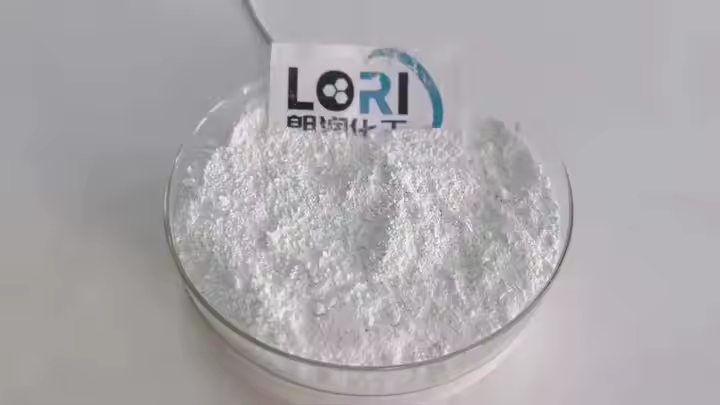
Buy Glutamate Cas 56-86-0
Buy Glutamate Cas 56-86-0
Glutamate is an amino acid, and a neurotransmitter (a chemical that nerve cells use to send signals to other cells). It is by a wide margin the most abundant excitatory neurotransmitter in the vertebrate nervous system.[1] It is used by every major excitatory function in the vertebrate brain, accounting in total for well over 90% of the synaptic connections in the human brain. It also serves as the primary neurotransmitter for some localized brain regions, such as cerebellum granule cells.
Biochemical receptors for glutamate fall into three major classes, known as AMPA receptors, NMDA receptors, and metabotropic glutamate receptors. A fourth class, known as kainate receptors, are similar in many respects to AMPA receptors, but much less abundant. Many synapses use multiple types of glutamate receptors. AMPA receptors are ionotropic receptors specialized for fast excitation: in many synapses they produce excitatory electrical responses in their targets a fraction of a millisecond after being stimulated. NMDA receptors are also ionotropic, but they differ from AMPA receptors in being permeable, when activated, to calcium. Their properties make them particularly important for learning and memory. Metabotropic receptors act through second messenger systems to create slow, sustained effects on their targets.
Because of its role in synaptic plasticity, glutamate is involved in cognitive functions such as learning and memory in the brain.[2] The form of plasticity known as long-term potentiation takes place at glutamatergic synapses in the hippocampus, neocortex, and other parts of the brain. Glutamate works not only as a point-to-point transmitter, but also through spill-over synaptic crosstalk between synapses in which summation of glutamate released from a neighboring synapse creates extrasynaptic signaling/volume transmission.[3] In addition, glutamate plays important roles in the regulation of growth cones and synaptogenesis during brain development.
Biosynthesis
Glutamate is a very major constituent of a wide variety of proteins; consequently it is one of the most abundant amino acids in the human body.[1] Glutamate is formally classified as a non-essential amino acid, because it can be synthesized (in sufficient quantities for health) from α-ketoglutaric acid, which is produced as part of the citric acid cycle by a series of reactions whose starting point is citrate. Glutamate cannot cross the blood–brain barrier unassisted, but it is actively transported out of the nervous system by a high affinity transport system, which maintains its concentration in brain fluids at a fairly constant level.[4]
Glutamate is synthesized in the central nervous system from glutamine as part of the glutamate–glutamine cycle by the enzyme glutaminase. This can occur in the presynaptic neuron or in neighboring glial cells.
Glutamate itself serves as metabolic precursor for the neurotransmitter GABA, via the action of the enzyme glutamate decarboxylase.

Reviews
There are no reviews yet.